
Every breed of dog has their own traits and personalities, and dachshunds are definitely no exception. Their reputation for being stubborn is well known and, in my experience, not misplaced. I do believe that it is misunderstood, however. Dachshunds were bred for independence and for making split-second decisions on their own. Their breeding to chase and flush out badgers independent of their handlers and owners is still in their DNA. They love to bark – a throwback to hunting when they had to alert their owners from underground. They love to dig – those big, front, paddle paws and strong chest muscles make them born diggers. They love to chase prey – any squirrel, bird or rabbit is fair game.
Miniature dachshunds were bred to hunt rabbits. And their long, low bodies are no accident. Their sausage-dog shape developed in Germany made them perfect for tunneling underground to take on prey fiercely and without fear. They are indeed a big dog in a tiny dog’s body – at least in their minds. They will stand up to and take on dogs much larger than their short legs will allow. They are brave little hunters, and they were bred to do a job.
With that in mind, it’s important to realize that they are not couch potatoes and will not be happy as couch potatoes. They still need a job, even if that job is agility training, scent training or simply sniff walks through the neighborhood. Enrichment toys that work their brains are great to keep them mentally satisfied. Hide and seek treat toys are great for their food-motivated minds and stomachs.
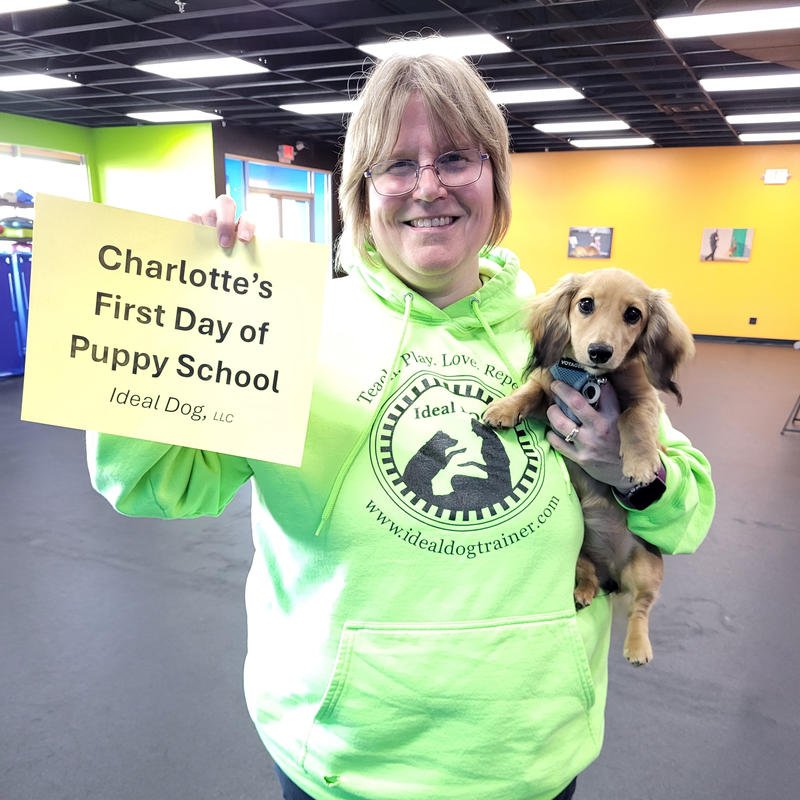
Although I attempted to do DIY training with Charlotte at first, I soon realized that I was in over my head. I needed help to guide her active little body and behaviors. A dachshund without a “job” can become bored and destructive, so puppy day school became our first experience with outside, expert trainers. Charlotte attended without me for one morning a week for eight weeks and was exposed to other dogs, people, the local home improvement store (where she was a favorite of the staff), grooming tools, varied surfaces and basic manners training. These mornings wore her out, and she typically fell into a happy and satisfied sleep for the rest of the afternoon, giving both of a well-needed break.
After puppy day school, I joined her for further basic manners and commands training one evening a week for six weeks. We reinforced her sit – down – stay – leave it – wait – place commands together, and the training was a great bonding experience as she learned what I expected, and I learned how to work with her personality.
I highly recommend checking your local area for competent trainers who can help navigate the first few weeks and months of your doxie’s life. It will pay off in the long run.